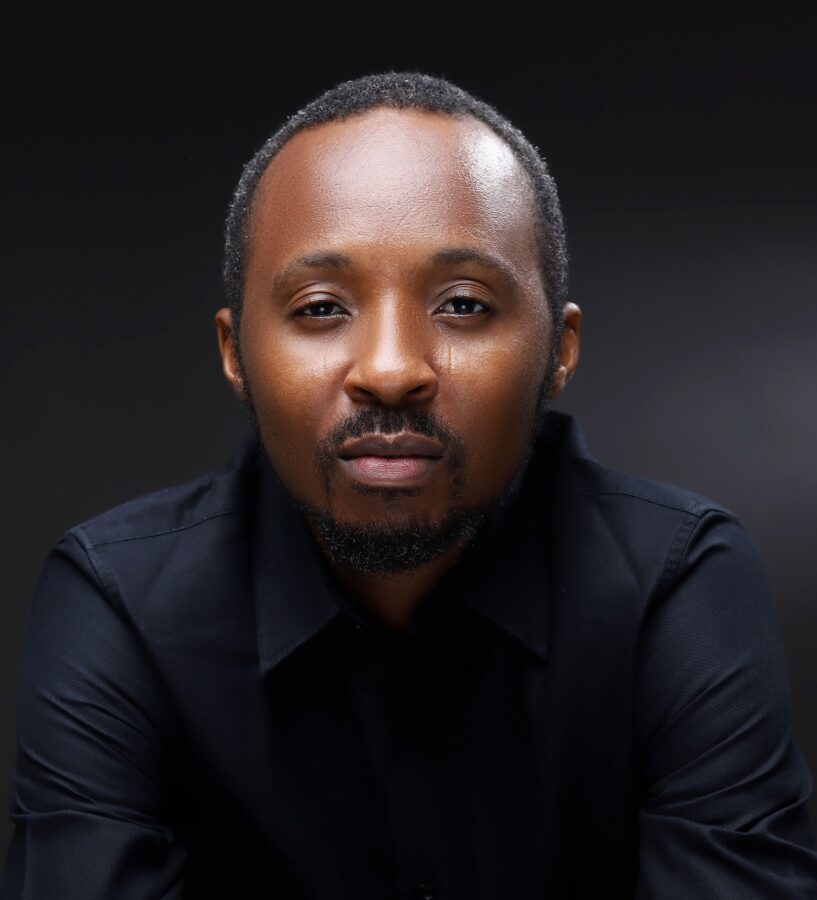
Olasunkanmi Adebayo or Suki, as he is fondly called, has developed several relationships in the Nigerian film and TV scene in the many years he has worked in it. One of those relationships is with Emporium Films, a production outfit he has collaborated with on TV commercials and film projects. So, he may have assumed it was another one of those projects he was to work on when, sometime in early 2023, he was contacted by Jamiu Soyode, one of Emporium’s producers.
But the project Soyode was calling about, a film titled Lady, was a bit unusual. The company was working with first-time feature director Olive Nwosu and she wanted to bring actors and actual sex workers together. Suki was interested; he had some experience in looking in what he calls “unconventional talent pools”. Sometime later he met Nwosu and they “aligned quickly on her vision and commitment to authenticity”.
The process of casting wasn’t as quick as their alignment. Indeed, by the time his work was complete, it was December 2024. This, he tells Film Efiko, is not how Nigerian productions work. “The biggest difference was time and intentionality,” he says. “Casting unfolded over 14 months, which allowed for deep exploration and due diligence. Given the emotional and physical demands of the film, we worked closely with psychologists and intimacy coordinators to prepare actors safely and responsibly.”
Casting Sex Workers
Naturally, there were challenges, chiefly because it was difficult to find sex workers who were willing to take part in a production that was partly about their lives. “The process required trust-building, sensitivity, and time,” Suki says. “We scouted extensively across Lagos and other southwestern states, searching for performers with the right emotional temperament and screen presence.”
To get it right, Suki and his team were involved in viewing what he says were “hundreds of self-tapes” as well as visiting theatre productions, churches, universities, and, yes, brothels. “Olive is a gentle taskmaster with a very intentional process,” he says. “So, we had scouting, training, workshops, screen tests, and character development before making final casting decisions.”
As it turned out, finding screen-ready sex workers was not the only tricky part of his job. Another was finding trained middle-aged actors, partly because there isn’t a centralised database for actors. “Finding actors in their 40s and 50s remains a particular challenge in Nollywood,” he says.
Casting Bucci Franklin
Then came the challenge of casting Bucci Franklin, perhaps the most recognisable actor in the film’s list of cast members. It “was a journey in itself,” he says.
Asked to explain, Suki says, Franklin is a “very specific kind of actor”. For some, this would mean he’s famous. Suki, however, means something quite different. “Olive and I needed someone who could hold quiet authority without overpowering the story.”
Franklin seemed to be the right fit. But there were logistical difficulties with getting Franklin. He was not in Lagos and he was booked and busy on other productions. In short, he was unable to send in a self-tape. The Lady team persisted and, somehow, was able to get through to the actor eventually. They flew him to Lagos from Port Harcourt for screen tests and in-person readings. “We needed to be absolutely sure the character chemistry, tone, and emotional restraint aligned with the world of the film.”
The crew’s patience paid off. “When it finally clicked, it felt inevitable,” Suki says now.
Beyond casting such a known name, other challenges included “sourcing a Chinese actor” and “casting children and actors with dwarfism”. “It became a carnival of casting,” says Suki.
Sundance and Berlinale Rewards
Nwosu was already in the Sundance pipeline, having shown a short at the festival years ago. So, perhaps Lady’s Sundance premiere was foretold. The film, however, has achieved something unprecedented for Nigerian coproductions at major festivals. It is the first Nigerian coproduction that has gotten invited to Sundance and the Berlin Film Festival in the same year. (It receives a European premiere at the Berlinale in February.) This level of international success, Suki believes, provides an opportunity for Nigerian actors.
“The producers and director took a bold step by backing a fully local cast in an international co-production space where recognisable global names are often prioritised,” he says. “Partners like HanWay Films, BFI, and Film4 supporting this approach opens real pathways for Nollywood actors to position themselves globally.”
It does feel like an important point to make, as Lady comes on the heels of My Father’s Shadow, the Nigerian co-production that was the country’s main international success story last year, given its premiere and reception at the Cannes film festival. Father’s Shadow was also backed by the BFI and featured the well-known British actor Sope Dirisu in the leading role. By contrast, Lady stars Jessica Gabriel’s Ujah, an actress who isn’t a household name in Nigeria.
As Suki explains, in seeking an actress to play lead, the crew came up with a list of performers whose quality of work isn’t matched by their popularity. “Jessica stood out immediately from her self-tape,” Suki says. “Even in that early submission, there was a stillness and emotional intelligence that felt rare.” She came even closer to snagging the role when she came in to perform for the team.
“Olive and I shortlisted her among our top three almost instantly,” he says. “When she steps into a scene, she transforms.”
Strong Production Structure
Besides the challenges of the casting process, Suki says Lady’s production structure was stellar. “We had a strong production backbone from detailed screen and camera tests to intensive location recces, scene breakdowns, and clearly articulated call sheets.”
All of which makes obviously Suki glad, especially as a player on the national scene, he believes there are lessons to be ferried into the average set across the country. “Not every production can operate at that scale,” he says, “but many of these processes are adaptable and invaluable even for smaller productions.”
Industry watchers will probably be looking to see if some of these practices do make it into mainstream Nollywood. For now, though, the main test of the utility of the structural novelties of this semi-Nigerian production is the quality of Lady itself. Has he seen it? What does he think of it?
“I found it bold and deeply moving,” he says. “From the opening moments, Alana Mejía González’s cinematography pulled me in.”
He then goes on to talk about the film’s sound design, music, and visual language as setting up the city of Lagos as “both beautiful and brutal. The audience isn’t allowed to look away: one moment you’re immersed in the underbelly of Lagos, the next you’re laughing, shocked.”
You are on the verge of setting down an entire review, I tell him.
He laughs and says, “But you asked”.
Lady premiered at the Sundance Film Festival on 22 January. It is available for screening for online festival guests.