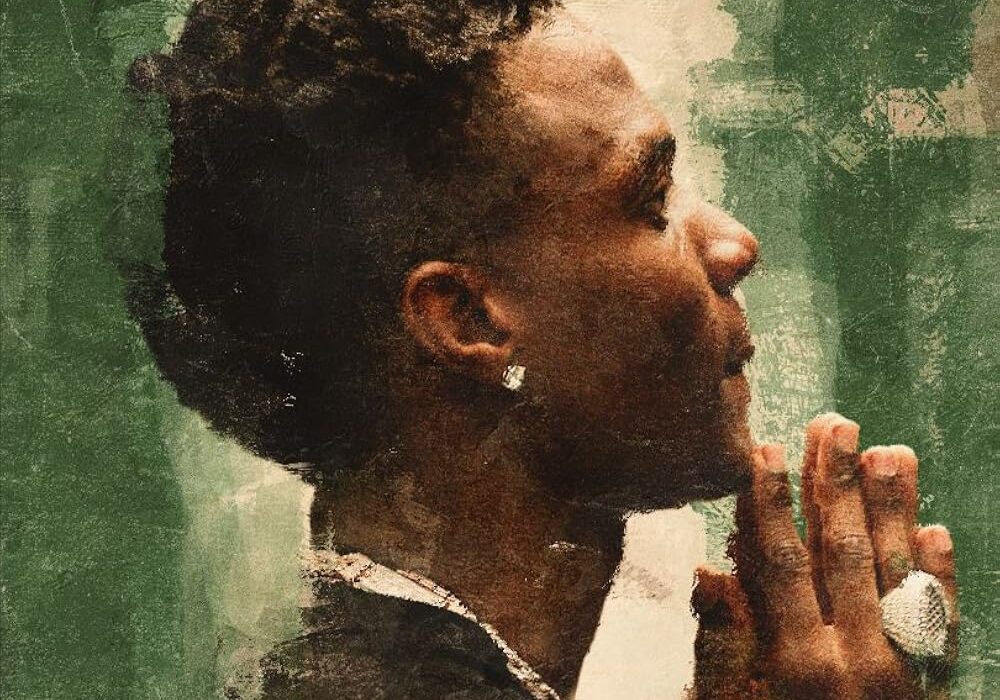
“The most important thing in life is to inspire,” says Wizkid right at the start of Wizkid: Long Live Lagos, an HBO documentary celebrating the Nigerian popstar’s impressive global success. Inspiration is, of course, good. But is it really the most important thing in life? Whatever you think, it is hard to argue that the line is easier said than believed.
It is the kind of empty statement anyone who has followed Wizkid interviews over the past decade would expect. In well over a decade of making music, Wizkid hasn’t given his listeners more than a handful of lyrics they can quote outside of singalongs. Words are not the thing for Wizkid—vibes are. He is simultaneously one of Nigeria’s most interesting figures when he sings and one of pop music’s most vapid when he speaks.
So, when Seni Saraki, publisher of pop magazine NATIVE and one of the docu’s producers, says, “Wizkid is a man of few words; he doesn’t really say much,” he is naming the challenge before director Karam Gill. Even so, a part of Gill’s problem is self-imposed. He sets up his documentary’s first half as one in which the political importance of Wizkid trumps everything else. This is a bad idea for an artist who just doesn’t care about politics. As he once told the Financial Times, “I’m never going to go in a studio and record a song about my government, that’s a waste of a session”. In the documentary, Wizkid himself says he tries to “just be a musician”.
That’s not enough—because it is the curse of Africa that when a western behemoth like HBO shows up for an African subject, politics has to be involved. Femi Kuti and Saraki do well in this regard, the latter at one point explaining that although Canada can fit into Africa thrice, you wouldn’t know that from looking at a map.
HBO production values can’t save popstar with nothing to say. Efiko Score: 5.5/10
Around the halfway mark, other things are thrown into the mix, the main one being a countdown to a Wizkid performance at London’s Tottenham Hotspur stadium, where, in 2023, he became the first African to perform. There is also a subplot involving a fan based in Lagos who gets an opportunity to see Wizkid in London. This part of the documentary doesn’t really jell because there are elements that Gill gestures towards, extracting some political value out of Nigeria-to-US travel but excising its practicalities: how was this particular fan chosen? Who paid for his flight? How did he get the notoriously difficult-to-obtain US visa?
The countdown, thus, becomes the most successful part of Wizkid: Long Live Lagos. It is an incomplete portrait but it does give fans a chance to see some of what goes into a career like Wizkid’s and into crafting a stadium-sized show. I was intrigued to see that in promoting Wizkid’s “Made In Lagos” album, some visual inspiration was taken from James Brando and James Dean in Streetcar Named Desire and Rebel Without Cause. This is an indication that, by that point, Wizkid’s global positioning was hardening.
The documentary has to be looked upon in the same light: it is for a global audience with some familiarity with the name Wizkid and his music. Fans and listeners from Nigeria expecting to see more about his origins will be disappointed. What they’ll get are excursions around Surulere, where Wizkid grew up, and soundbites from Sunday Are, Wizkid’s first manager. Banky W, perhaps the most important part of Wizkid’s origin story, is confined to a single decade-old video you can find on YouTube. These are likely decisions that were not taken ignorantly. So, it is worth considering what could have convinced HBO that Wizkid deserves a place in its Music Box series. The answer is almost certainly the success of Essence.
Does this documentary exist without Wizkid’s main global smash from Made In Lagos? Probably not. The documentary doesn’t try to deny that. It is the last song shown onscreen during his London performance and the entirety of it is played. It is therefore prudent to see Long Live Lagos as a jubilatory account of Wizkid’s career in the west post-Essence.
So, this isn’t a documentary in service of Nigerians, most of whom met Wizkid back when he was a sort of employee of the month under Banky W. And while Wizkid is essentially uninteresting as an authorised documentary subject, the music—its catchiness—is undeniable. It is the main reason this well-produced documentary exists.